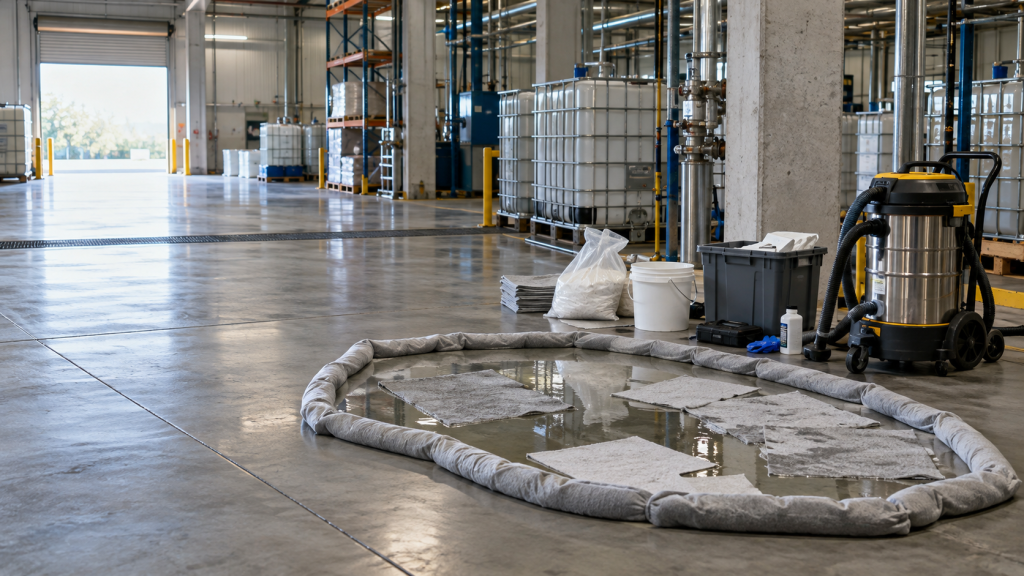
Containing a chemical spill is an important first step, but containment and remediation are not the same thing. Containment controls the immediate spread. Remediation determines what was affected and what still needs to be addressed.
If a spill is still active, uncontrolled, or creating an immediate hazard, leave the area and follow emergency instructions. The City of Calgary advises evacuating an indoor hazardous-material spill and contacting emergency services rather than attempting the cleanup yourself.
Contained Does Not Mean Finished
Once the visible spill has been controlled, the next questions are what was released, where it travelled and what needs to happen before the affected area can move toward normal use.
Alberta’s contaminant-management framework reflects this broader process. Following a release, the response can involve reporting, determining the extent of contamination, remediation or risk management and documenting the outcome. Read the Government of Alberta contaminant management guidance.
A spill may therefore look contained while additional assessment is still required.
Determine What the Chemical Spill Actually Affected
The visible edge of a spill does not always define the complete cleanup area.
Assessment may consider the substance involved, how much was released, where it travelled and which surfaces, materials or environmental media were affected.
That same principle applies in other hazardous cleanup situations. Mayken’s guide to recovered stolen vehicles and drug contamination explains why appearance alone may not answer whether contamination remains.
Chemical Spills Can Also Create Airborne Hazards
Not every chemical spill remains on the ground.
Some substances can release vapours on their own. Others can react with surfaces, water or other chemicals and produce gases or additional hazards. Mixing incompatible chemicals can also cause dangerous reactions.
The Canadian Centre for Occupational Health and Safety recommends using the chemical’s Safety Data Sheet and technical information to identify properties such as toxicity, flammability and reactivity before determining the appropriate response. It also warns against mixing incompatible chemical wastes because reactions can occur.
For Mayken, knowing what spilled and how it can react is particularly important. Some airborne releases may require response equipment or controls beyond Mayken’s capabilities. In those situations, the appropriate next step may be escalation to emergency services or another responsible authority rather than sending a standard remediation crew into the area.
If vapours or gases are suspected, evacuation and ventilation decisions should be based on the substance involved and directions from trained responders. Opening doors, operating ventilation systems or otherwise trying to clear the air should not be treated as a universal DIY step because the correct approach varies by chemical and incident.
The Remediation Plan Depends on the Incident
There is no single chemical spill remediation method that applies to every situation.
A release on a sealed concrete floor may require a very different response from one that reaches porous materials, soil or groundwater. The chemical, concentration, quantity, migration path and applicable requirements can all influence the remediation scope.
The same idea appears in other property issues. A musty smell can indicate an underlying moisture problem rather than simply a surface-cleaning issue.
The goal is to understand the actual conditions before deciding what remediation is appropriate.
Contaminated Materials Still Need to Be Managed
Chemical spill cleanup can generate contaminated absorbents, damaged materials, protective equipment, containers or other waste.
Removing those materials from the spill area does not end the responsibility for them. Handling, transportation and disposal requirements can depend on the substance and circumstances.
Transportation incidents can also involve separate federal dangerous-goods requirements, which should not be assumed to apply identically to every fixed-site spill.
Documentation Helps Clarify What Happened
After a spill, property owners, insurers, contractors, regulators or other stakeholders may need a clear record of the incident and response.
Depending on the situation, documentation may cover what was released, assessment findings, remediation activities, contaminated-material handling and any follow-up that was required.
This is another reason identifying the actual hazard matters before deciding that ordinary cleaning is enough. Mayken discusses that distinction in its guide to when a rental property needs more than standard cleaning.
When Can the Area Return to Normal Use?
There is no universal timeline.
The answer depends on the substance, whether vapours or gases were involved, where contamination travelled, what remediation was required and whether further assessment or direction from an authority applies.
A clean-looking floor alone cannot answer those questions.
What Facility Managers Should Have Ready
When contacting a remediation team after a spill, useful information includes the chemical or product involved, the Safety Data Sheet if available, the approximate quantity and location of the release, whether multiple substances may have mixed, what emergency actions have already occurred and whether first responders or regulators are involved.
Providing that information early can help determine whether a remediation team can respond directly or whether the incident first requires a higher level of hazardous-material response.
Chemical Spill Cleanup Is a Process
Once the immediate spread has been controlled, the focus shifts to understanding the full scope. That includes surface contamination, possible airborne hazards, affected materials, waste management, documentation and any required follow-up.
Mayken Hazmat Solutions provides environmental spill cleanup and related hazardous-remediation services in Alberta. When a spill has been contained but questions remain about what happens next, identifying the substance and understanding how it behaves are critical to determining the appropriate response.