Winter changes how buildings behave. Pipes freeze. Moisture gets trapped. Ventilation drops. Units stay closed longer than usual. For property managers, these conditions quietly increase the risk of contamination issues that can spiral fast if they’re missed or delayed.
From hoarding cleanup scenarios to sewage backups and rodent activity, winter creates a perfect environment for problems that impact tenant safety, compliance, and long-term property condition. Preparation is not about reacting faster. It’s about knowing what winter brings and acting before small issues turn into regulated cleanup events.
Jump To:
Why Winter Is Harder on Rental Properties
Cold weather does more than stress heating systems. It changes how contaminants spread and how long they remain active.
During winter:
- Buildings are sealed tighter, limiting airflow
- Moisture from heating and condensation has nowhere to escape
- Small leaks can stay hidden for weeks
- Odours and biological matter linger longer indoors
This is why winter contamination issues often feel sudden. The problem didn’t appear overnight. It built up quietly behind walls, under flooring, or inside units with limited access.
The Overlap Between Hoarding and Winter Risk
Hoarding situations don’t pause for winter. In fact, colder months often make them worse.
When clutter restricts airflow and heat circulation:
- Moisture builds up faster
- Rodent activity increases
- Waste and organic material break down indoors
- Fire and health risks escalate
For property managers, hoarding cleanup for rental properties becomes more urgent in winter because the conditions amplify every underlying risk. What may have seemed manageable in summer can become a compliance issue once winter sets in.
Common Winter Contamination Scenarios Property Managers Face
1. Hoarding-Related Contamination
Hoarding situations often involve:
- Accumulated waste
- Spoiled food
- Pest activity
- Structural damage hidden by clutter
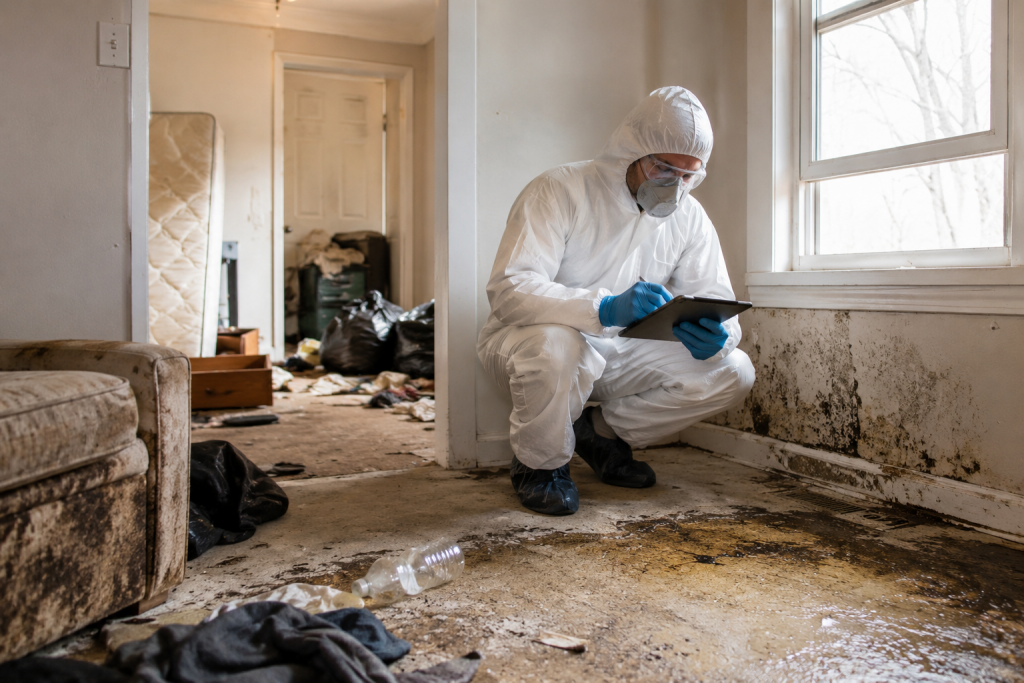
These are not simple cleanouts. Once biological hazards are present, hoarding cleanup becomes regulated work requiring containment, disposal, and documentation.
2. Sewage and Plumbing Failures
Frozen pipes and backups are common winter calls. When sewage enters a unit, even in small amounts, it creates a biohazard.
This is where winter biohazard cleanup becomes necessary. Household cleaning does not address the health risk or compliance requirements tied to sewage exposure.
3. Rodent Activity in Sealed Buildings
Rodents seek warmth. Winter drives them indoors, often into:
- Utility rooms
- Storage areas
- Hoarded units
Droppings, nesting material, and urine introduce biological hazards that spread through shared ventilation systems.
4. Moisture-Driven Mould
Condensation from heating systems and poor airflow can create mould in walls, ceilings, and behind fixtures.
When mould spreads beyond surface growth, certified remediation is required.
When Maintenance Becomes Regulated Cleanup
This is where many property managers get caught off guard.
Winter contamination often starts as a maintenance issue. It crosses into regulated cleanup when:
- Biological material is present
- Tenant health is at risk
- Waste requires controlled disposal
- Documentation is required for insurance or compliance
At this point, delaying action increases liability.
This distinction is especially important in hoarding cleanup for rental properties, where health, fire, and safety codes intersect.
Why DIY or In-House Cleanup Falls Short in Winter
Even well-intentioned cleanup attempts can make winter contamination worse.
Common issues include:
- Spreading moisture into clean areas
- Inadequate protective equipment
- Missed contamination behind walls or floors
- Lack of documentation
Winter conditions slow drying and reduce ventilation, meaning mistakes linger longer and cost more to correct later.
For insight into the risks of unregulated cleanup, read here.
What Preparation Looks Like for Property Managers
Preparation does not mean overreacting. It means having systems in place before winter problems escalate.
Know the Warning Signs
- Persistent odours
- Repeated tenant complaints
- Moisture around baseboards or ceilings
- Units with limited access or airflow
Have a Clear Escalation Plan
Maintenance teams should know when to stop and call certified help.
Document Early
Photos, notes, and timelines protect you if insurance or compliance questions arise later.
Partner With a Certified Cleanup Provider
Early involvement reduces downtime and limits disruption for tenants.
Why Certification Matters for Rental Properties
Certified cleanup protects property managers in three key ways:
- Compliance with safety regulations
- Clear documentation
- Reduced liability
This is especially critical in winter, when conditions mask the true scope of contamination.
How Winter Biohazard Cleanup Protects Tenants and Assets
Winter biohazard cleanup is about more than cleaning. It restores safety.
Certified response typically includes:
- Risk assessment
- Containment
- Removal of affected materials
- Decontamination
- Odour treatment
- Verification and reporting
For property managers, this means:
- Faster unit turnover
- Fewer repeat complaints
- Stronger defensibility if issues arise
Hoarding Cleanup and Tenant Relationships
Hoarding situations require discretion and respect. Winter adds pressure, but rushed or mishandled responses can damage tenant trust.
Certified hoarding cleanup for rental properties balances:
- Safety
- Compliance
- Compassion
Handled correctly, it protects everyone involved and prevents future escalation.
Why Acting Early Saves Time and Stress
Delays in winter lead to:
- Larger affected areas
- Increased cleanup scope
- Higher tenant disruption
- Greater documentation needs
Early action keeps winter contamination contained.
Winter Risk Is Predictable and Manageable
Winter contamination is not random. It follows patterns property managers see every year. Preparation, awareness, and certified support turn winter from a liability into a manageable season.
The goal is not to react faster. It’s to act smarter.
If you’re managing rental properties this winter and facing contamination concerns, early action matters.
Contact Mayken Hazmat Solutions for certified, discreet support across Alberta.